Last updated on March 13th, 2026
Hiring nowadays is not quite what it used to be. Resumes are arriving faster and faster, and candidates are disappearing quicker. The competition is indeed relentless. Companies no longer hire by instinct alone; they hire by insight.
A data-driven approach helps you understand how to measure recruitment effectiveness. These numbers help you improve every step of your hiring journey. When you start measuring recruitment effectiveness, you stop guessing. You start refining and improving productivity. You improve candidate experience, and you build a hiring system that actually works for you.
Let’s explore the effectiveness of the recruitment process in practical and simple terms.
Table of Contents
- How To Evaluate The Success Of The Hiring Procedure?
- ROI
- Price Per Hire
- Recruitment Time Length
- Level Of Hiring
- How Can The Effectiveness Of Hiring Be Measured?
- Ratio Of Interviews To Hires
- Score For Candidate Experience
- Offer Acceptance Rate
- Application Abandonment Rate
- Employer Source
- How To Evaluate The Success Of The Hiring Procedure?
Recruitment Process Effectiveness
Let us first ask what is effective recruitment?
Effective recruitment means:
- Hiring the right person
- At the right time
- At the right cost
- Who stays
- And performs
The effectiveness of the recruitment and selection process starts with filling vacancies. However, it is about building momentum inside the organization. It reduces hiring friction and gives you clarity.
When you focus on evaluating recruitment effectiveness, you move from activity to impact.
How to Evaluate the Success of the Hiring Procedure?
The evaluation of the recruitment process depends on metrics. Clear ones. Honest ones.
Different roles demand different measurements. A senior developer cannot be measured the same way as a junior executive. Still, some universal metrics apply across industries.
Let us break them down.
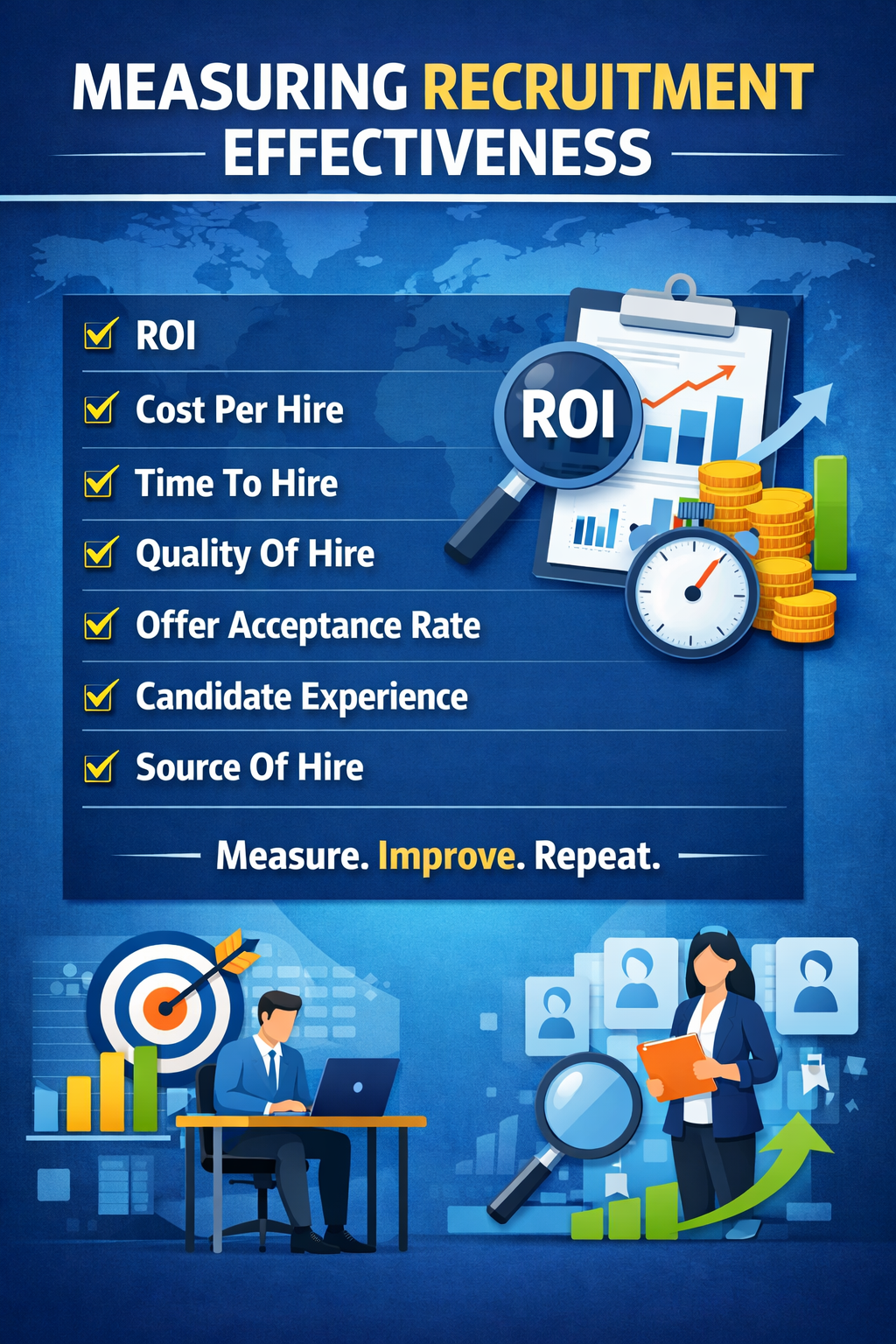
1. ROI
Return on Investment is important.
When calculating ROI in recruitment, you measure:
- Total hiring cost
- Revenue generated by the employee
- Productivity gains
- Cost savings
If you invest ₹1,00,000 in hiring and onboarding and the employee generates ₹10,00,000 in measurable value over time, that is meaningful ROI.
A strong ROI indicates high recruitment effectiveness.
However, ROI should not only be financial. Consider:
- Reduced turnover
- Faster project completion
- Higher team morale
- Better client satisfaction
These invisible gains matter.
2. Price Per Hire
Cost per hire (CPH) tells you how much you spend to bring one employee onboard.
It includes:
- Job advertisements
- Recruiter salaries
- Recruitment tools
- ATS platforms
- Equipment
- Onboarding costs
- Background checks
The lower the cost per hire, the more efficient your recruitment process may be. But lower does not always mean better. Cheap hiring can become expensive if turnover increases.
Ways to reduce cost per hire:
- Creating a talent pipeline
- Building employer branding through social media
- Encouraging employee referrals
- Using an Applicant Tracking System (ATS)
- Improving internal mobility
Always compare your cost per hire with industry benchmarks.
3. Recruitment Time Length
Time is important in hiring. Time to hire measures the number of days between application and job offer.
Research shows top candidates remain available for a limited period. In competitive markets, strong candidates can receive multiple offers within days. If your process is slow, talent walks away.
To improve:
- Measure time spent at each hiring stage
- Identify delays
- Automate repetitive tasks
- Simplify interview rounds
Though faster is good, reckless is not. A balanced timeline improves the effectiveness of recruitment without sacrificing quality.
4. Level Of Hiring
Cost per hire measures expense. It does not measure quality.
Quality of hire answers:
- Are new employees performing well?
- Are they staying?
- Are managers satisfied?
Indicators of quality include:
- Performance ratings
- Retention rate
- Productivity levels
- Cultural fit
- Promotion speed
When you understand how to measure hiring effectiveness, you get quality and speed. Hire slow if needed, but hire right.
How Can The Effectiveness Of Hiring Be Measured?
Beyond cost and time, deeper metrics reveal hiring strength. Let’s examine them.
1. Ratio of Interviews to Hires
This metric shows how many interviews are required to make one hire.
Example: If you interview five candidates to hire one, your ratio is 5:1.
A very high ratio may indicate:
- Weak screening process
- Poor job description clarity
- Inefficient sourcing
A balanced ratio signals strong pre-screening and accurate targeting. It is a quiet but powerful indicator when measuring recruitment effectiveness.
2. Score For Candidate Experience
Candidates remember how you treat them.
To measure experience:
- Conduct post-interview surveys
- Ask for feedback
- Track response time
- Monitor communication clarity
A poor candidate experience damages employer branding, and a strong one improves acceptance rates.
3. Offer Acceptance Rate
This metric compares offers made vs. offers accepted.
Low acceptance rate may mean:
- Compensation is uncompetitive
- Hiring process is too long
- Employer branding is weak
- Role expectations are unclear
Improving this directly improves recruitment effectiveness.
4. Application Abandonment Rate
This measures how many candidates start but do not complete the application.
Common reasons:
- Lengthy forms (over 30 minutes)
- Poor mobile optimization
- Technical glitches
- Unnecessary personal questions
To reduce abandonment:
- Simplify forms
- Enable resume autofill
- Optimize for mobile
- Be transparent about job expectations
Small design improvements can dramatically improve the online recruitment experience.

Employer Source
Where do your best candidates come from?
Track sources such as:
- Job portals
- Social media
- Employee referrals
- Recruitment agencies
- Career pages
Identify high-performing channels and reduce spending on low-quality ones. Smart sourcing strengthens the effectiveness of the recruitment process over time.
Evaluate the Online Recruitment
Online recruitment dominates hiring in 2026.
To properly evaluate the online recruitment, assess:
- Website application speed
- ATS efficiency
- AI screening accuracy
- Interview scheduling automation
- Data analytics dashboards
Artificial Intelligence tools now assist in:
- Resume parsing
- Skill matching
- Bias reduction
- Predictive hiring success
However, technology cannot replace human judgment; it can only assist it. Balance automation with empathy.
Constant Evaluation of Recruitment Process
Recruitment is not a one-step process.
The steps include
- Screening.
- Interviewing.
- Assessing.
- Offering.
- Onboarding.
Each stage needs regular review.
Use:
- Structured interviews
- Skill-based assessments
- Behavioral testing
- Hiring analytics tools
Continuous improvement ensures long-term recruitment effectiveness.
Emerging Artificial Intelligence Business Solutions Trends
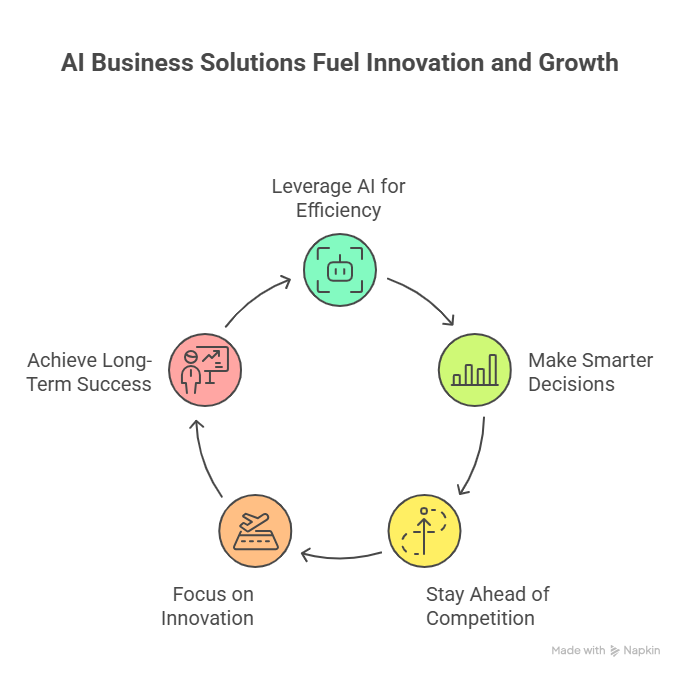
By integrating artificial intelligence business solutions, organizations can further streamline their operations, making smarter decisions and automating repetitive tasks to accelerate growth. Adopting the right AI solutions is essential for companies aiming to remain competitive and future-ready in a rapidly changing market. With AI-driven insights, businesses can refine their recruitment processes, enhance candidate experiences, and drive more informed hiring decisions, ultimately staying ahead of the curve and achieving long-term success. This enables them to build a more efficient and effective hiring system.
FAQs
1. What is effective recruitment?
Effective recruitment is hiring qualified candidates efficiently while ensuring strong performance. Besides, they keep in mind retention and cultural alignment.
2. How to measure recruitment effectiveness?
You measure recruitment effectiveness using metrics such as cost per hire, time to hire, quality of hire, offer acceptance rate, and candidate experience scores.
3. Why is evaluating recruitment effectiveness important?
Evaluating effectiveness of recruitment process helps reduce turnover, improve productivity, lower hiring costs, and strengthen employer branding.
4. How can companies evaluate the online recruitment process?
Companies can evaluate the online recruitment process by tracking application completion rates and mobile optimization performance. Besides, they track ATS efficiency and candidate feedback.
5. What is the difference between cost per hire and quality of hire?
Cost per hire measures financial investment. Quality of hire measures performance, retention, and overall contribution of the employee.
Conclusion
Recruitment is not an easy process. When the recruitment and selection process improves, organizations grow stronger from the inside. For that, you have to track metrics, observe patterns, and adjust strategy.
Because in 2026, hiring is not about filling seats. It is about building systems for success, and systems must be measured.
Ready To Improve Your Recruitment Effectiveness?
At Recruit Ninjas, we help businesses refine every layer of their hiring strategy. From sourcing to interviewing to onboarding, we manage the entire recruitment lifecycle, especially for remote teams.
If you want better hires, faster processes, lower costs, and measurable results, it is time to partner with experts who understand how to measure recruitment effectiveness in real time.
Connect with Recruit Ninjas today.
Suggested Reads
https://www.recruitninjas.com/blog/top-8-recruitment-process-outsourcing-benefits/ – Key advantages of outsourcing recruitment operations
https://www.recruitninjas.com/blog/remote-recruitment-vs-freelance-marketplaces-long-term-hiring/ – Compare remote hiring and freelance models
https://www.recruitninjas.com/blog/remote-recruitment-solutions-for-niche-roles/ – Hiring strategies for specialized remote positions
https://www.recruitninjas.com/blog/can-ai-solve-recruitment-challenges/ – AI’s impact on modern recruitment challenges

David Bodiford
David Bodiford has been the Chief Strategy Officer at Vserve Ecommerce. Specializing in business development and strategic planning, David leads initiatives to expand Vserve Ecommerce's market reach, focusing mainly on the B2B sector. His expertise in digital marketing and strategic partnerships is integral to enhancing the agency's ecommerce solutions.