Last updated on December 26th, 2025
The pandemic has quite flipped the switch on how we work. What began as a temporary fix during COVID-19 soon became a permanent way of life. This could be said to be the beginning of the remote revolution. Running a business remotely sounds quite exciting, but when your people are scattered across continents and time zones, it can turn messy fast.
Leaders, HR pros, and managers had to unlearn their old ways and rebuild new rhythms. It wasn’t smooth sailing. According to the Society for Human Resource Management (SHRM), nearly 71% of companies struggled hard to adjust when teleworking became the new normal. But they soon found their groove. With the right tools, mindset, and culture, managing remote employees became one of their smartest moves.
The bottom line is that when handled right, remote work isn’t a limitation but a powerful ally.
Below are the ten best tips for managing remote employees. These tips will give you clarity and confidence while learning how to hire remote employees effectively.
Table Of Contents
Organization and Flexibility Are the Key
Effective Communication Is Important
Expectations Should Be Set Early and Often
New Hires Need to Be Onboarded
Track the Progress of Your Employees
Improve Your Connections and Be Available to the Team
Organization and Flexibility Are the Key
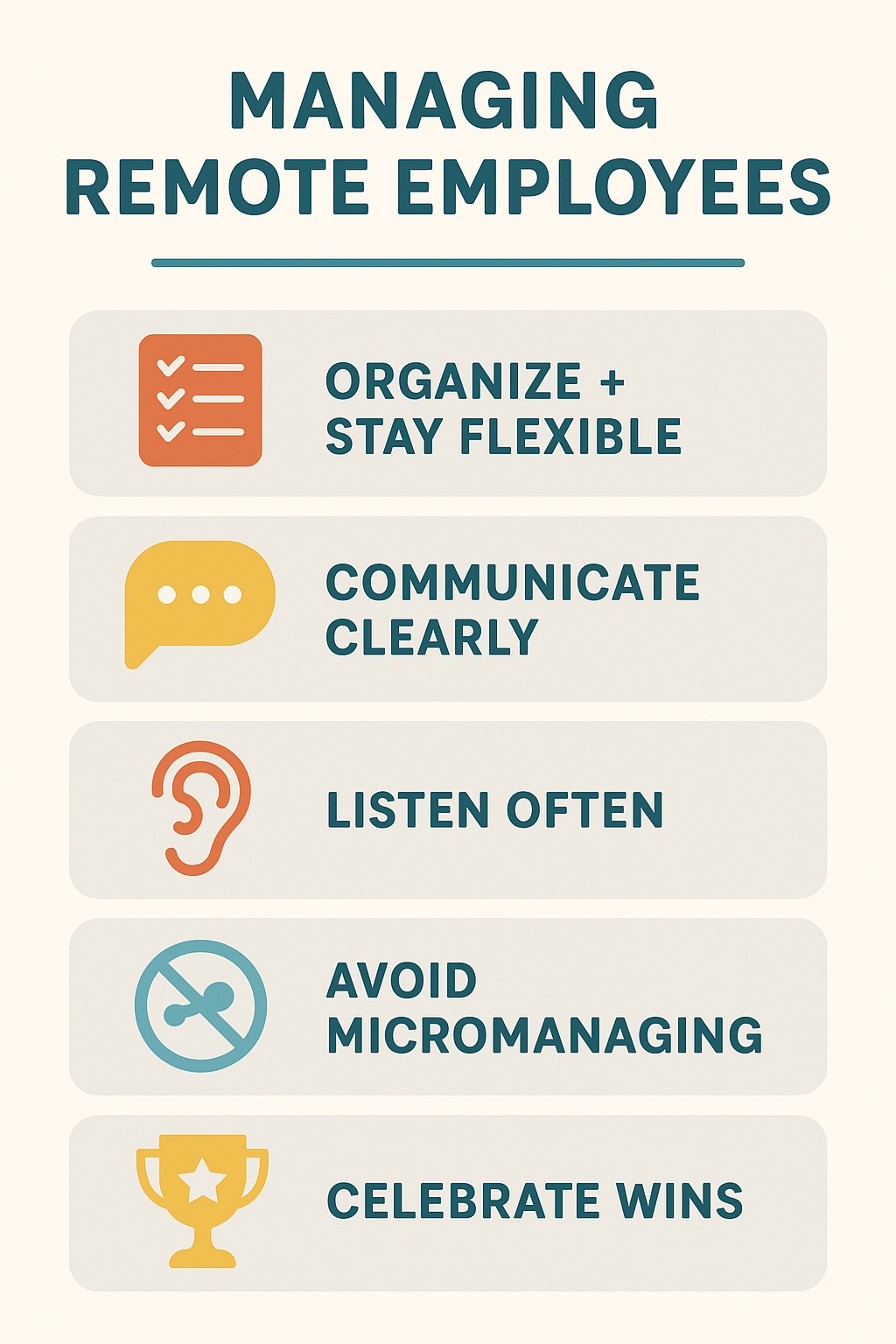
A great remote culture is equal parts structure and flow. Organization keeps chaos in check; flexibility keeps creativity alive. When managing remote employees, set up quite defined workflows, but don’t turn them into barriers.
Your team might work best at sunrise or in the evening. It is best to let them. The point is more about outcomes, not about clock-ins. Keep meetings quite short, and share agendas early. Use digital tools to bring order to the mix. Make your work culture structured enough to stay in tune, but free enough for improvisation.
Effective Communication Is Important
In remote team management, communication is quite the binding thread that holds everything together. Without it, things fall apart quickly.
Use tools like Slack, Microsoft Teams, or Zoom to stay quite connected. But don’t just talk about tasks, talk about the people too. Try a “Fun Friday” check-in, or a casual chat. A quick poll can bridge the distance. Learn how your team likes to communicate. Some thrive in calls, others prefer to follow up through messages. Balance is the game. Too much oversight feels quite suffocating; too little feels like silence.
Learn to Listen
The best leaders do more than talk; they tune in. When you hire remote employees, remember that each one comes with quite a rhythm of their own.
Host virtual feedback sessions. Ask what’s working and what’s not. Listening doesn’t just solve problems; it builds trust. It makes people feel heard, and in remote work, that’s half the battle won. True remote team management begins with the quiet art of understanding.

Expectations Should Be Set Early and Often
When your team works miles apart, clarity becomes the way to take the team forward.
From the day you hire remote employees, make expectations quite clear. Define goals, timelines, and communication flow. Write down policies and keep them where everyone can find them easily. Then, check in at regular times to stay aligned. Great managers set expectations not once, but continuously, adjusting them as the team moves forward.
Never Micromanage
Micromanagement lowers the initiative to complete work and keeps creativity in a fog. Remote work thrives well when employees feel ownership. Instead of constantly and annoyingly looking over digital shoulders, hold weekly sync-ups and use project tools for visibility. Focus more on the finish line and not on the footsteps. Once your team knows you trust them, they’ll surprise you with how much they can do.
New Hires Need to Be Onboarded
Starting a new job remotely can feel overwhelming for the employee. That’s why onboarding is quite essential.
When hiring remote employees, go beyond a welcome email. Create digital onboarding kits and assign buddies. Introduce new hires into the heart of your culture. Offer mentorship, feedback, and praise for small wins early. When people feel like they belong from day one, they become quite loyal to the team.

Track the Progress of Your Employees
While flexibility keeps things human, accountability keeps things moving.
Encourage regular updates, daily stand-ups, and weekly recaps. Use tools like Asana, ClickUp, or Trello for visibility. The goal is to synchronize. Tracking progress is about harmony, and not quite about control. When everyone can see the bigger picture clearly, collaboration becomes your second nature.
Improve Your Connections and Be Available to the Team
Remote work can make even the most social employee feel a little isolated. So, you need to build some bridges.
Find reasons to host informal meetups. Celebrate milestones. Share jokes in team chats. Keep a virtual “open door” policy. When leaders are reachable, teams feel quite safe, and that is the glue that holds remote teams together.
Adapt to Your Situation
Old habits die hard, but remote work needs new ones. What worked in the office might fail quite
spectacularly online.
Avoid marathon meetings. Replace them with short, high-impact virtual huddles. Try asynchronous communication for teams in different time zones. There could be messages that don’t demand instant answers. Adapt fast, and your team stays quite strong. The remote world rewards those who bend, not those who break.

Celebrate the Little Wins
Big success stories begin with quite small wins. In remote work, these moments matter even more.
A quick “You nailed it!” on Slack or a surprise shout-out in the team chat can turn an average day into a motivated one. Recognition needs just sincerity. When managing remote employees, never quite underestimate the power of a simple thank-you. It’s what keeps spirits quite high and engagement real.
FAQs
1. What is the best way to manage remote employees effectively?
Keep it simple and communicate well. Trust in your employees, and stay quite flexible. Regular check-ins matter more than constant oversight.
2. How do I hire remote employees seamlessly?
Write clear job roles and use reliable hiring platforms. Have a thorough onboarding process for employees that feels quite human.
3. What are common challenges in remote team management?
Time zones, miscommunication, and maintaining engagement are the common biggest hurdles.
4. How do I build culture in a remote team?
Celebrate achievements, and plan fun virtual events. Encourage open, informal conversations.
5. Why is flexibility important when running a business remotely?
Flexibility is important because it keeps your team quite adaptable. The team remains focused and motivated even when the world shifts unexpectedly.
Conclusion
Managing and hiring remote employees is all about human connection. The best remote leaders don’t just assign tasks; they build trust. They communicate with care, listen long, and adapt quite fast.
When your remote teams feel heard and appreciated, they thrive. And that’s how the modern workplace wins: through compassion wrapped in clarity.
Ready to hire remote employees who fit seamlessly into your culture?
Recruit Ninjas helps you find, onboard, and manage skilled remote professionals worldwide — fast, reliable, and cost-efficient. Empower your business. Hire smarter. Build stronger.
Visit Recruit Ninjas to start building your remote team today.
Suggested Reads

Anne Davis
Anne Davis, with a 19-year career at Vserve Ebusiness Solutions, currently leads as the Director of Sales and Marketing. Specializing in the eCommerce sector, she focuses on client relations, social media marketing, and email campaigns. Anne is dedicated to driving business growth in the digital space, utilizing her deep understanding of customer needs and market trends.