Last updated on March 9th, 2026
Remote work once lived on the edge of the corporate map. It was a curious, slightly suspicious arrangement. A decade ago, employers believed remote employees, especially remote programmers, might drift into distraction. They might lose focus somewhere between home couches and kitchen tables. But times shift, and circumstances push. Technology grows wings. And suddenly, the world sees remote work not as an oddity but as a strong, stable spine supporting modern business operations.
Before we go deeper, let’s understand the new rhythm these remote professionals bring into the business world. Let us discuss how every remote developer, engineer, coder, and problem-solver quietly rewrites the old handbook of work.
Table of Contents
Remote Employees Are More Productive
The Present Status of Remote Programmers
Remote Programmers: How and Why They Are Changing the Way We Do Business

Remote Employees Are More Productive
Remote work has always carried lots of doubt, but research dismantles those myths. Airtasker surveyed 1,004 full-time employees across the U.S., including 505 remote employees. The findings surprised many. Remote workers showcased sharper efficiency, fewer idle minutes, and increased flexibility.
Another layer of proof comes from the American Psychological Association. Their reports reveal that remote work doesn’t just increase output; it enhances satisfaction. Happier people accomplish more. Strange how obvious that feels, yet how long it took the world to realize it.
The Present Status of Remote Programmers
Today, remote programmers are no longer exceptions. Technology evolved, and teleworking tools blossomed. Virtual reality meetings, collaborative software, portable workspaces have all aligned to support a distributed workforce. Because of this shift, global entrepreneurs now recognize the power of hiring remote developers. They have learnt the advantages of creating flexible teams built on skill rather than geography.
The demand for remote talent is soaring. And companies, large and small, now choose to hire remote developers as a primary strategy, not a backup option.
What Is a Remote Developer?
A remote developer is a professional who manages the technical machinery of a business from anywhere. They handle internal system needs, build software, troubleshoot issues, and support customers digitally. Office walls don’t define their effectiveness; their work does.
From a massive engineering department to a compact team of developers and programmers, they maintain the same responsibilities. There are just fewer interruptions and more autonomy.
Remote Programmers: How and Why They Are Changing the Way We Do Business
Remote experts are reshaping operations across industries. Let’s journey through the reasons.
Reduced Infrastructure Costs
When a company chooses to hire remote developers, physical space becomes optional. No desks and no office equipment are needed. No electricity consumption for extra cubicles. A business owner bypasses expenses related to workspace setup, maintenance, and utilities.
And surprisingly, the workflow stays smooth. Projects continue, and communication thrives. Productivity remains untouched, sometimes even strengthened.
This is one of the greatest financial advantages of embracing remote programmers.
Reduced Employment Costs
Remote hiring opens the global talent map. Employers can hire remote programmers from any region. They can choose highly skilled individuals without limiting themselves to local candidates.
This flexibility reduces salary bottlenecks. It eliminates onsite employee benefits like office meals, commute reimbursements, and facility services.
The result? Quality talent at efficient cost, which is a balanced win for both sides.
Increased Productivity
Many remote professionals willingly stretch beyond the typical schedule. Deadlines push them, and passion drives them. Work-life balance comforts them.
Research widely confirms that remote workers deliver stronger productivity. And remote employees often admit they work longer hours because the environment feels more natural.
So when companies hire remote employees, they often witness improved output, smoother task completion, and faster turnarounds.
Greater Alignment
In a remote setting, teams communicate intentionally. Distractions shrink, meetings are purposeful, and conversations stay focused.
A team of developers and programmers working remotely tends to collaborate smoothly, often better than in a busy office environment.
Alignment strengthens, and bonding improves. Coordination becomes clean and glitch-free. This harmony extends to client communication as well, amplifying business efficiency.

Business Can Operate Across Different Time Zones
One giant advantage of remote hiring is time-zone diversity. Companies that hire remote developers from multiple regions naturally operate round-the-clock.
This allows businesses to cater to customers globally. Issues are resolved faster. Projects progress continuously, and growth becomes smoother.
However, entrepreneurs must consider language compatibility when building such teams. Communication remains king in distributed structures.
Paves the Way to Smarter Investments
When companies save on office costs and employment expenses, they free up capital. This capital can support scaling, asset purchases, innovation, and new ventures.
Hiring remote programmers becomes not just an employment choice but a financial strategy for smarter investment.
Risk Is Lowered
Less physical interaction means fewer onsite liabilities. It means no property wear, no office-related mishaps, no infrastructure failures affecting operations.
Remote setups significantly reduce risks associated with traditional work environments. And for many business owners, this peace of mind is priceless.

Emerging AI Solutions for Business Trends
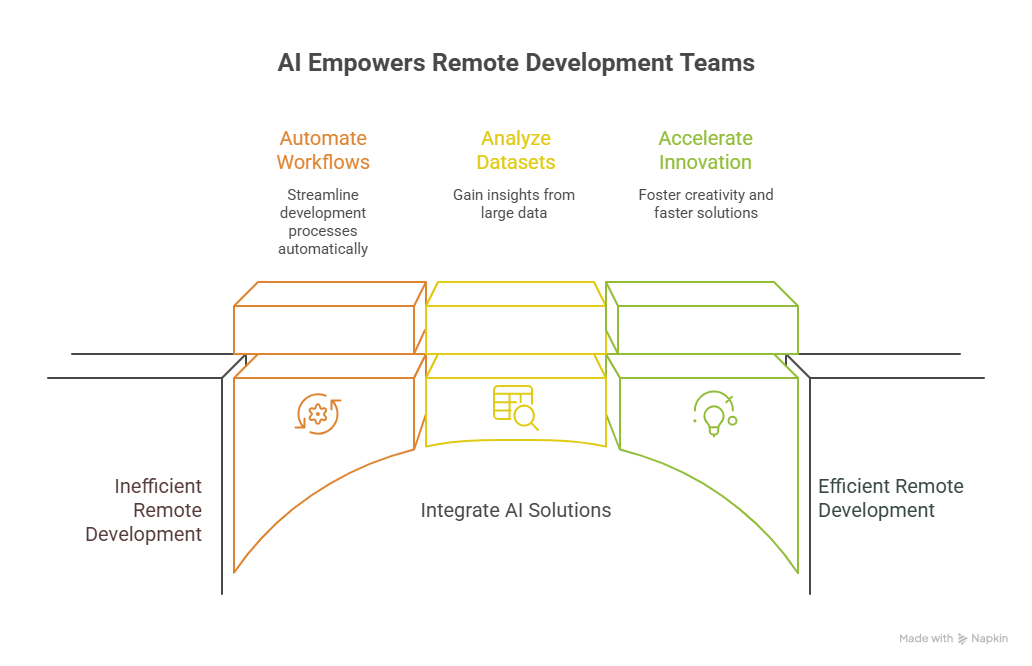
As businesses increasingly rely on remote programmers to build and scale digital products, integrating intelligent technologies has become equally important. Implementing AI solutions for business enables organizations to automate development workflows, analyze large datasets, and accelerate innovation across teams. From AI-assisted coding to predictive analytics and intelligent automation, these capabilities help remote development teams work more efficiently and deliver smarter solutions. By combining skilled global programmers with AI-driven tools, companies can improve productivity, enhance product quality, and stay competitive in a rapidly evolving technology landscape.
FAQs
1. Why are remote programmers becoming more popular?
Remote programmers are becoming more popular because they offer flexibility, reduce costs, and provide access to global talent without compromising efficiency.
2. Are remote employees as productive as office employees?
Yes, multiple studies show that remote employees often outperform office workers due to fewer distractions and better work-life balance.
3. What roles can a remote developer handle?
A remote developer can manage software development, debugging, maintenance, system updates, customer support, and internal technical tasks.
4. Is it cost-effective to hire remote developers?
Yes, hiring remote developers reduces infrastructure, salary overheads, and operational costs, making the model very cost-effective.
5. How do teams communicate effectively when working remotely?
Teams use digital tools, scheduled check-ins, and goal-based workflows, allowing a team of developers and programmers to stay aligned effortlessly.
Conclusion
Remote work is no longer a temporary shift. It is a transformation. And at the heart of this transformation stand strong, focused remote programmers, reshaping how companies operate, grow, and compete.
Entrepreneurs today choose to hire remote developers because the model is scalable, flexible, cost-efficient, and deeply productive.
A modern business no longer needs walls. It needs skills, alignment, and adaptability. And remote talent delivers all three.
Ready to build a powerful remote tech team?
Partner with Recruit Ninjas and hire top 3% global Remote Programmers and Remote Developers in under two weeks. Interview pre-vetted talent, make your choice, and let our team handle onboarding, compliance, and remote employee management.
Your dream team is one decision away.
Suggested Reads
- https://www.recruitninjas.com/blog/top-employee-onboarding-tips-when-you-hire-software-programmers/ -Tips to onboard software programmers smoothly and efficiently.
- https://www.recruitninjas.com/blog/5-cost-saving-tricks-while-looking-to-hire-a-professional-software-programmer/ – Smart techniques for reducing developer hiring costs.
- https://www.recruitninjas.com/blog/key-steps-and-considerations-for-creating-a-strong-software-development-team/– Core steps to build a powerful development team.
- https://www.recruitninjas.com/blog/four-tips-on-managing-remote-employees-successfully/– Practical guidance for managing remote employees effectively.

Anne Davis
Anne Davis, with a 19-year career at Vserve Ebusiness Solutions, currently leads as the Director of Sales and Marketing. Specializing in the eCommerce sector, she focuses on client relations, social media marketing, and email campaigns. Anne is dedicated to driving business growth in the digital space, utilizing her deep understanding of customer needs and market trends.